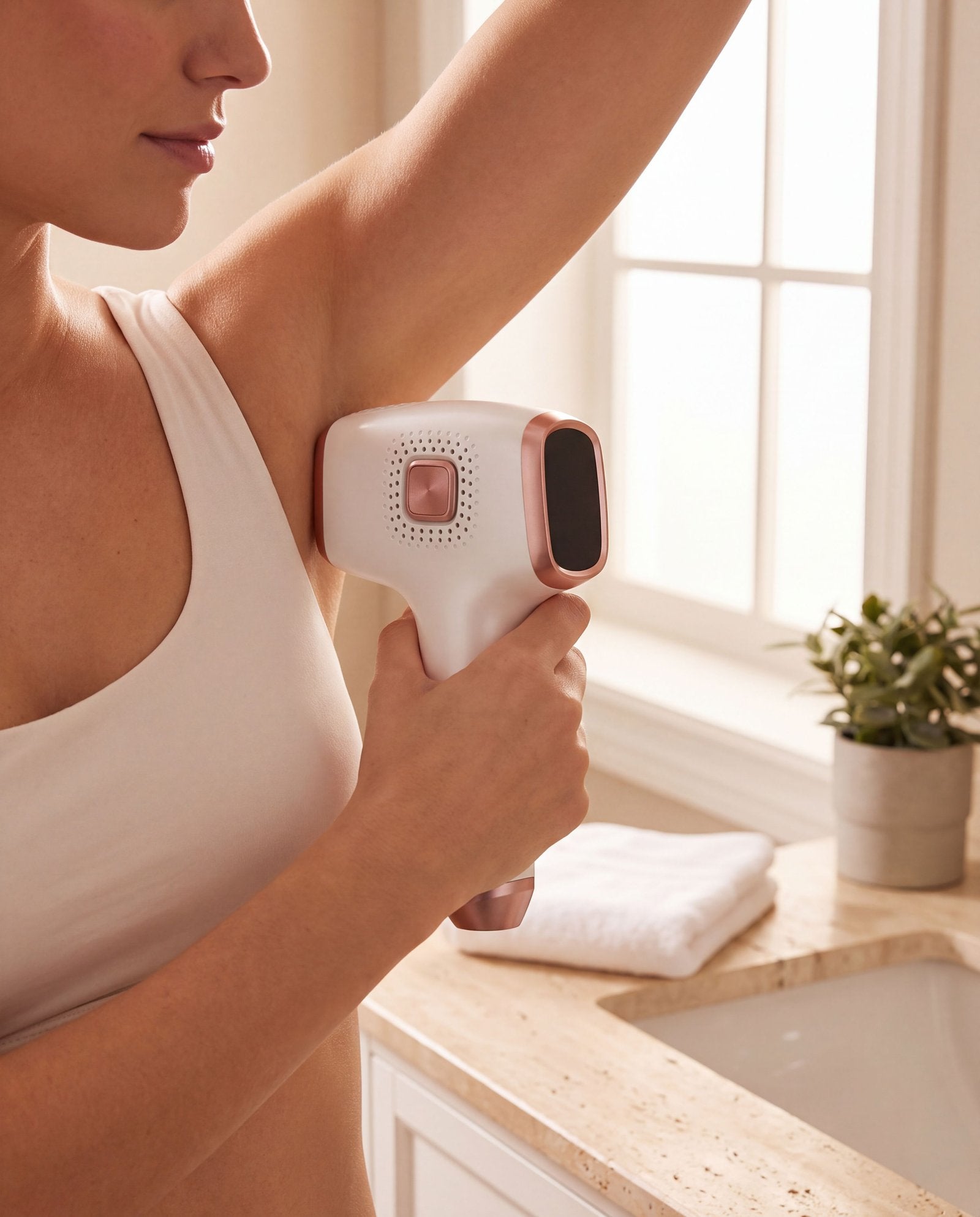
The best at-home IPL devices of 2026, compared.
Four devices and the salon benchmark, compared on the things that actually decide whether IPL works out for you: what you pay, how it feels, and what happens if it doesn’t suit you.
What IPL actually does.
IPL sends pulses of light down the hair to the pigment at the root, warming it and interrupting the growth cycle. Regrowth comes back finer and slower. That is long-lasting hair reduction, not permanent removal, and no device on this page or salon honestly promises more.
It takes commitment: one session a week, with most people seeing clearly reduced regrowth by weeks 8–12. It is also selective. IPL works best on darker hair with light to medium skin tones, whoever makes the device. Any brand that skips those two caveats is selling you something.
The comparison.
| DEVICE | PRICE | COOLING | GUARANTEE |
|---|---|---|---|
| VIENA Pearl 01 | $179.99, flat | Ice-cooling contact plate | 90 days, money back |
| Ulike Air 10 | From ~$259 on sale (list $349) | Sapphire cooling | 100 days |
| Nood The Flasher 2.0 | $179 (from $199, rotating sales) | Not a headline feature | 90 days |
| Braun Silk-expert Pro 5 | From ~$349 (list up to $469.99) | Skin sensor, no cold plate | Standard returns |
| Salon laser | $697 avg per session · 6–8 sessions typical | Handled by the technician | — |
Competitor prices reflect published pricing at time of writing and move with their sale cycles. Salon laser figure: American Society of Plastic Surgeons national average per treatment; a course typically runs 6–8 sessions with touch-ups after.
Each one, fairly.
Ulike spends more on this category than anyone, and the Air 10 is a genuinely capable device: sapphire cooling, fast full-body sessions, a 100-day guarantee, and a large review base. What you pay depends on when you catch the coupon cycle. The list price is $349, and the real price is whatever this week’s stack of codes lands on. If you enjoy hunting the deal, it rewards you.
Nood built the friendliest brand in the category, and credit where due: their FAQ openly notes that a small share of IPL users don’t respond to the technology, which is rare honesty. The Flasher 2.0 runs $179 after the usual markdown from $199, with a 90-day guarantee. The checkout nudges you toward a serum subscription and a pricier “Pro” upgrade, so the simple $179 purchase takes some declining to keep simple. Cooling isn’t a headline feature of the device.
A century-old hardware company with the most restrained claims in the category: every number footnoted, safety treated as the product. Its skin sensor reads your tone and adjusts each flash automatically, which is genuinely reassuring for a first-time user. It’s also the most expensive device here, typically from ~$349, and no money-back guarantee is merchandised. The brand name carries the trust, and comfort relies on the sensor rather than active cooling.
Clinical laser is stronger than any at-home device, delivered by a professional, and the right call for some people. It is also a schedule and a bill: the American Society of Plastic Surgeons puts the average session at $697, a typical course runs six to eight sessions, and results still need touch-ups over time. You’re buying appointments rather than a device. For a single small area that math can work; for whole-body, it compounds fast.
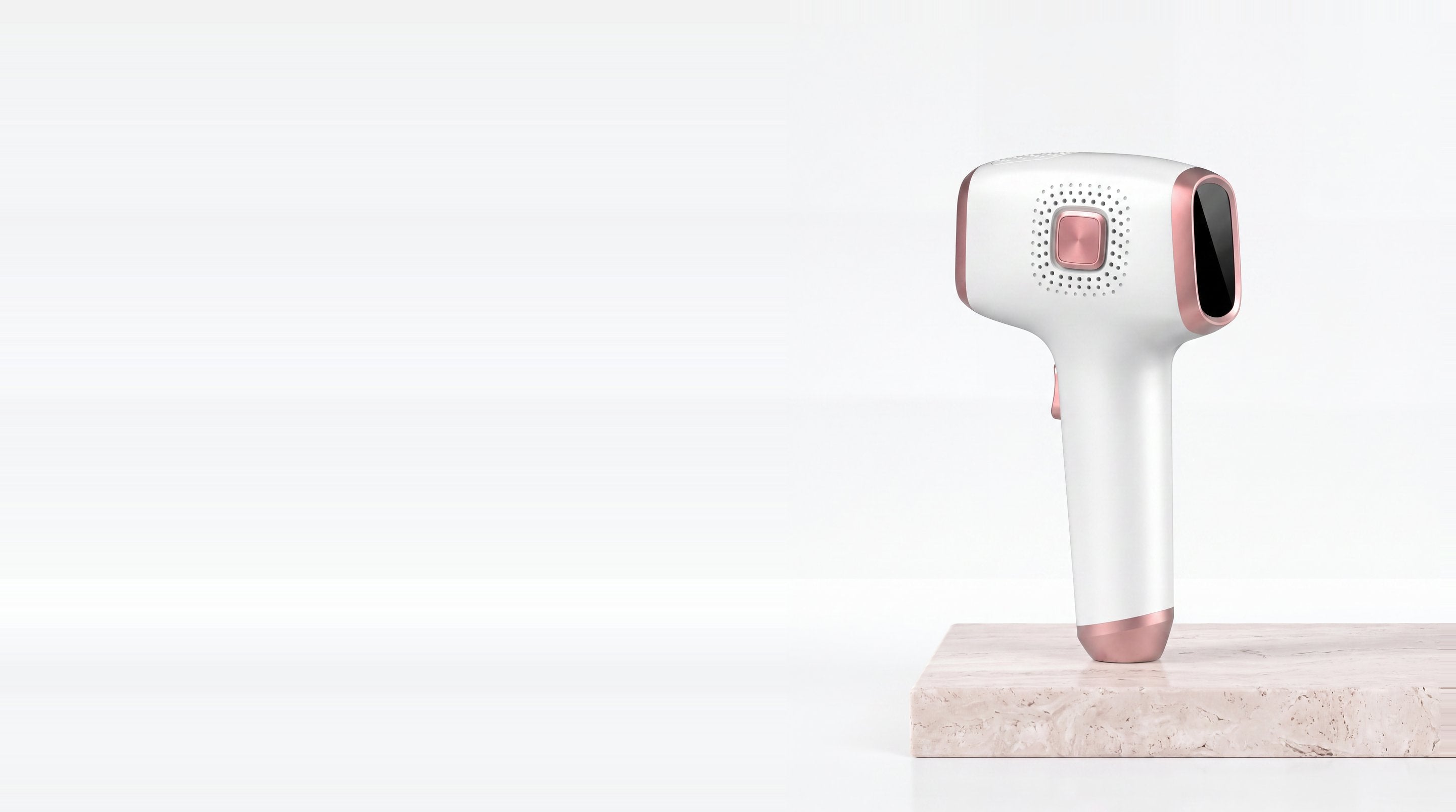
The most device per dollar, without the coupon hunt.
The Pearl 01 is the only device here where the sticker is the whole story: $179.99, whole body, one time. You get a chilled contact plate so every pulse lands on cooled skin, nine intensities, and a lamp rated for 999,999 flashes with no refills to buy.
90 days to change your mind.
Use it for a full cycle. If your regrowth isn’t visibly finer, send it back and we refund you in full.